
Global Energy Storage Market Sees Rapid Growth and Shifts
The global energy storage market is expected to reach 7 TWh in cumulative capacity by 2035, driven by growing demand, with India and Poland emerging as key players. The market is witnessing a shift towards standalone projects and paired capacity, with varying trends across regions.
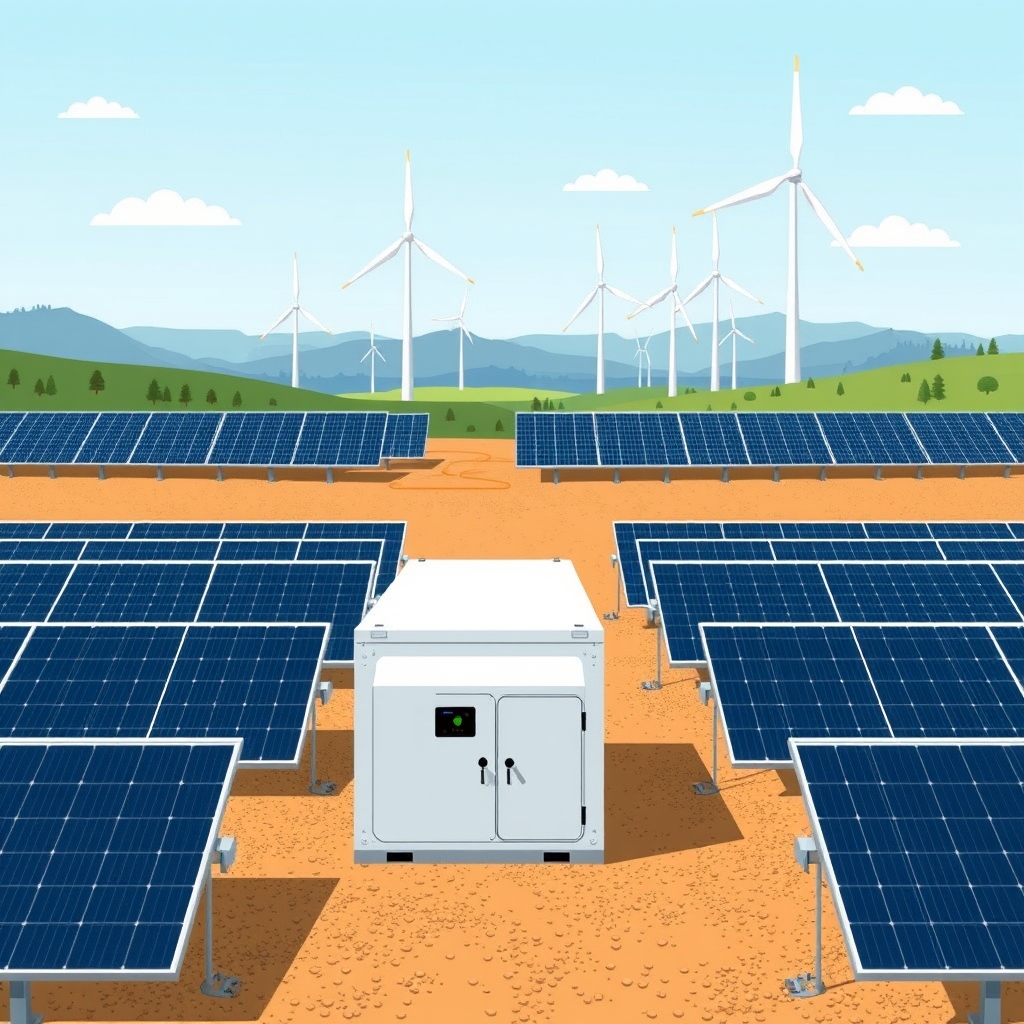
The global energy storage market is poised for rapid growth, with a forecast of 7 TWh in cumulative capacity by 2035. This growth is driven by increasing demand, with a 30% demand growth expected in 2026. The market is witnessing a shift towards standalone projects, with Europe being the most standalone-heavy market.
Market Trends and Outlook
The global energy storage market is rapidly evolving, driven by increasing demand and innovative technologies. China and the US are the two largest markets, with India emerging as the single largest contributor to global capacity and Poland as the number-one emerging market.
Key Trends and Developments
Some notable trends and facts about the global energy storage market include:
- A significant 130 GW of contracted offtake for storage, with utility power purchase agreements and tolling deals accounting for 3/4 of all contracts signed, indicating a strong commitment to energy storage from developers and investors.
- Standalone projects dominate the utility energy storage market, but paired capacity is gaining traction, with 1/3 of storage expected online by 2035 sitting alongside wind or solar plants.
- Europe's pipeline is overwhelmingly unpaired, while the US has close to 50% solar-paired utility storage additions, and India has introduced new rules requiring solar and wind projects to include co-located storage.
Implications for Developers, Investors, and Consumers
The market trends and outlook have significant implications for developers, investors, and consumers. With 80 GW of de-rated capacity cleared globally through government-led tenders, developers and investors have opportunities to capitalize on the growing demand for energy storage. As Anna Darmani, research director at Wood Mackenzie, notes, the market is poised for rapid growth, with a forecast of 7 TWh cumulative capacity by 2035. Consumers can expect increased adoption of energy storage solutions, particularly in regions with high industrial demand, such as Australia, which has seen 500,000 installations under the Cheaper Home Batteries subsidy.
Regional Market Trends
The global energy storage market is experiencing varied growth patterns across regions, driven by different factors and trends.
Residential Energy Storage
Residential energy storage has seen significant uptake in certain markets.
- Australia now leads the world in residential energy storage, with 500,000 installations under the Cheaper Home Batteries subsidy, surpassing Germany. Industrial demand for energy storage is notably larger in some regions, indicating diverse applications beyond residential use.
Utility-Scale Energy Storage
The utility-scale energy storage sector is also witnessing considerable growth and shifts.
- India has emerged as the largest utility-scale market, overtaking Australia. This growth is partly driven by new regulatory requirements: India's new rules mandate that solar and wind projects include co-located storage, specifying a minimum duration of 4 hours from 2029.
- In contrast, the US market currently has close to 50% of its utility storage additions paired with solar projects. Europe, however, stands out as the most standalone-heavy market, with its pipeline overwhelmingly consisting of unpaired projects, yet poised for the fastest growth in paired capacity. These regional trends have significant implications for developers, investors, and consumers, as they navigate the evolving energy storage landscape. The market is also seeing a rise in innovative project configurations, such as data centre-linked battery projects in the US, where gas-plus-storage pairings are becoming the preferred choice for emerging data center projects. With 130 GW of contracted offtake for storage and 80 GW of de-rated capacity cleared globally through government-led tenders, the sector is set for substantial growth, with projections reaching 7 TWh in cumulative capacity by 2035.
Repowering and Future Outlook
The energy storage market is poised for substantial transformation, driven by repowering and new capacity additions.
Trends in Repowering
Repowering is becoming a significant aspect of the energy storage market, with 40 GWh of repowered capacity expected by 2035. The US, Japan, and Germany are set to lead this trend, indicating a shift towards upgrading existing infrastructure.
Emerging Market Dynamics
Globally, 80 GW of de-rated capacity has been cleared through government-led tenders, showcasing the role of policy in shaping the market. India, in particular, has introduced new rules requiring solar and wind projects to include co-located storage, with a 4-hour minimum duration mandated from 2029 and storage capacity accounting for 10% of the project's capacity.
Implications for Developers and Investors
These changes have significant implications for developers and investors. For instance, standalone projects currently dominate the utility energy storage market, but paired capacity is increasing, with 1/3 of storage expected online by 2035 to be paired with wind or solar plants. Europe is poised for the fastest growth in paired capacity, despite its pipeline being overwhelmingly unpaired.
Market Outlook and Events
To navigate these changes, industry stakeholders can look to upcoming events for insights. Wood Mackenzie's research director, Anna Darmani, will likely provide valuable perspectives at the company's global energy storage outlook webinar on 3 November. Additionally, pv magazine is hosting virtual events on U.S. solar and energy storage (October 20-22, 2026) and European solar and energy storage (November 30-December 3, 2026), offering further opportunities to engage with market trends and outlook.
What to watch
Emerging Trends and Shifts
The global energy storage market is poised for rapid growth, with a forecast of 7 TWh cumulative capacity by 2035. Several key trends will shape the industry in the coming years.
- Standalone projects currently dominate the utility energy storage market, but paired capacity is gaining traction, with 1/3 of storage expected online by 2035 sitting alongside wind or solar plants.
- Europe is the most standalone-heavy market, while the US has close to 50% solar-paired utility storage additions.
Regional Developments
- India has overtaken Australia as the region's largest utility-scale market, driven by new rules requiring solar and wind projects to include co-located storage.
- Poland is the global number-one emerging market, while Australia overtook Germany as the world's leading residential energy storage market, with 500,000 installations under the Cheaper Home Batteries subsidy.
- China's and the US are the two biggest global energy storage markets, but Europe's annual installation overtook the US in 2026.
Implications for Developers, Investors, and Consumers
- 80 GW de-rated capacity has been cleared globally through government-led tenders, and 130 GW contracted offtake for storage, with utility power purchase agreements and tolling deals accounting for 3/4 of all contracts signed.
- Industrial demand is larger in some regions, and data centre-linked battery projects are taking shape in the US, with gas-plus-storage pairings being the new co-location favorites for emerging data center projects.
- As the market continues to evolve, 40 GWh of repowered capacity is expected by 2035, led by the US, Japan, and Germany.
Outlook and Events
Industry experts such as Anna Darmani, research director at Wood Mackenzie Power & Renewables, will provide valuable insights into market trends and outlook. Upcoming events include:
- A global energy storage outlook webinar by Wood Mackenzie on 3 November
- pv magazine's virtual events on U.S. solar and energy storage (October 20-22, 2026), European solar and energy storage (November 30-December 3, 2026), and NetZero Milan (October 21, 2026).
Source: pv magazine. This article is an original Luminity report based on the linked source.