ArcLight’s $5 Billion Solar Expansion Reshapes US Energy Market
When ArcLight Capital Partners announced its acquisition of Advanced Power last week, the solar industry sat up straight. Not just because of the price tag—$1 billion in immediate equity with plans to deploy $5 billion total—but what it signals for America’s energy transition. This isn’t merely another corporate merger; it’s a calculated bet that solar and storage will dominate the next decade of infrastructure spending.
Why This Deal Changes the Game
Advanced Power brings 18 years of development expertise across 11GW of projects. Combine that with ArcLight’s $25 billion in energy assets, and you’ve got a powerhouse capable of accelerating solar deployment at utility scale. The 20GW target? That’s enough to power 3.8 million homes assuming 25% capacity factors—roughly equivalent to adding three new nuclear plants’ worth of generation.
The Financing Puzzle Pieces
Here’s where it gets interesting. ArcLight’s initial commitment represents just 20% of the total planned investment. The rest will likely come through:
- Tax equity partnerships (think Bank of America or JPMorgan)
- IRA-related production credits
- Traditional project finance debt
This multi-layered approach mirrors how companies like NextEra Energy fund mega-projects, but with a twist—ArcLight’s emphasis on ‘dispatchable’ solar hybrids.
Batteries: The Secret Sauce
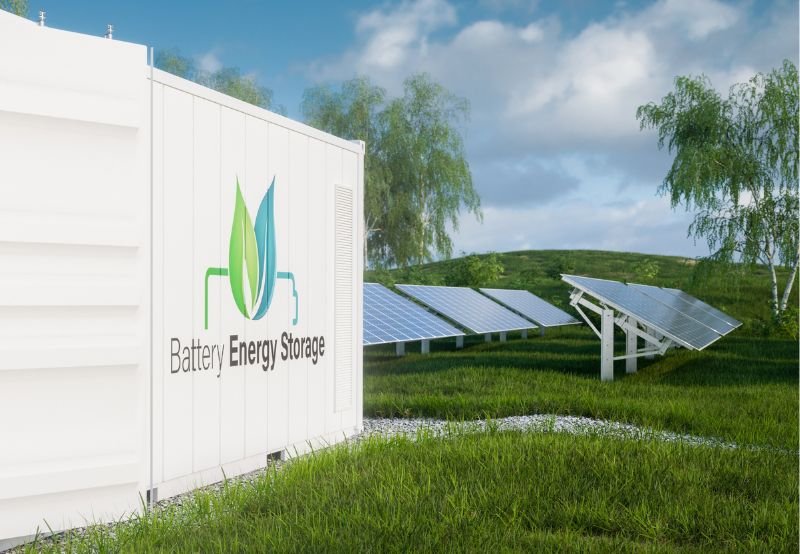
‘Solar alone won’t cut it anymore,’ remarked an ArcLight VP during the announcement. They’re right. Their 2023 Texas project—a 350MW solar array paired with Tesla Megapacks—delivered 92% availability during Winter Storm Heather. That performance convinced investors that renewables could meet baseload demands when engineered properly.
Winter Resilience Through Storage
Critics often ask: ‘What happens when the sun doesn’t shine?’ Advanced Power’s existing portfolio answers this with contingency plans:
- 4-hour battery systems at all new sites
- Overbuilding solar capacity by 15-20%
- Algorithmic trading via Autogrid’s DER optimization
The result? Projects that behave more like natural gas peakers than traditional solar farms.
Timing Meets Opportunity
This deal coincides perfectly with three converging trends:
- Panel prices at $0.23/W (down 42% since 2022)
- FERC Order 2023 speeding up interconnection
- DOE’s Grid Resilience grants
Remember SunEdison’s collapse? Today’s market offers precisely what was missing then—policy stability and mature technology.
The Jobs No One’s Talking About
Beyond megawatts, this announcement means 14,000+ construction jobs by 2028. Many will be in Rust Belt states where Advanced Power has existing ties—Ohio, Pennsylvania, and Indiana all stand to gain. That’s smart politics as much as smart business.
The solar industry just got a $5 billion wake-up call. Whether you’re an EPC contractor eyeing new projects or a utility planner reassessing your IRP, one thing’s clear: The era of timid solar ambitions is over.